
The Structure of Sponsorship Deals: VIK and Digital Access on the Rise

Authors - Kushaal Mathew and Norm O’Reilly
TL;DR
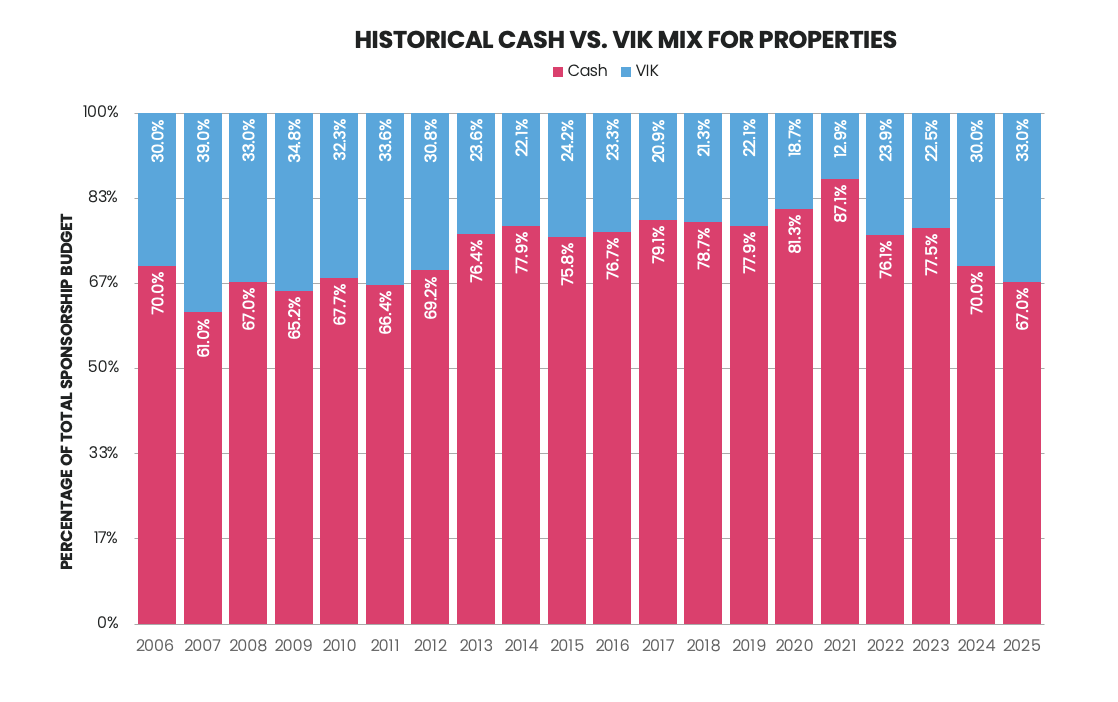
VIK has been rising since 2021 across every brand category the CSLS tracks.
Apparel/retail brands lead the pack at 40% VIK, followed by manufacturing (39%) and technology (37%).
Properties report receiving less VIK than brands say they're giving, a gap that the 20th annual CSLS report notes is from VIK spent outside the formal contract.
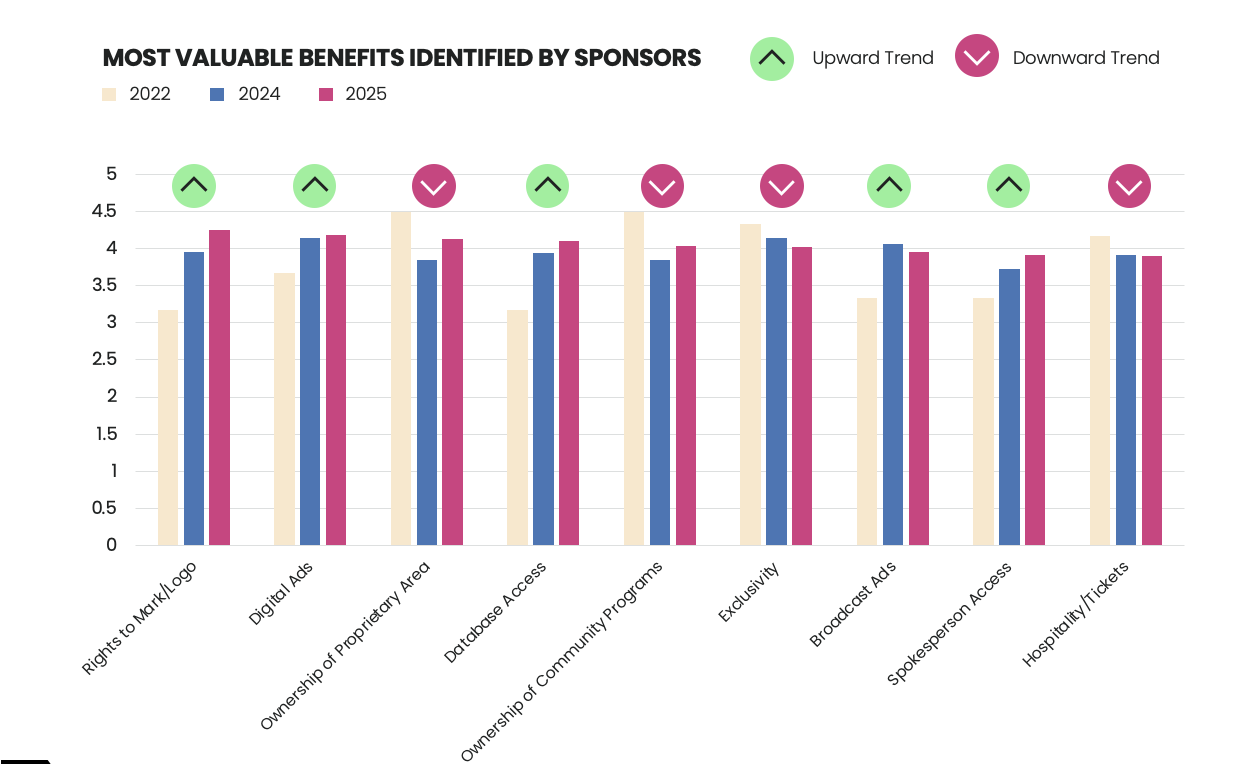
Sponsor priorities have shifted toward digital channels, broadcasting, and database access.
Over the two decades since we started measuring it, cash has dominated the rights fees structure in partnerships, which, of course, is no surprise, given that sponsorship salespeople incentives are normally structured as such. However, and what we think is a sign of the development of the field, the 20th annual CSLS data highlights that Value-In-Kind (VIK) is becoming increasingly popular among brands when structuring their partnerships. Since the pandemic, VIK has been climbing steadily, with some categories of Canadian brands now putting close to 40% of their sponsorship budget into products and services rather than cash. This is a sign of good sponsorship, as integrated products and services in activations is a key driver of success.
How Much of a Sponsorship Deal Is Actually Cash Anymore?
According to this year's CSLS data, the answer depends heavily on category and the particular deal. Apparel and retail brands report the highest VIK share, at 40% in products and services against 60% cash. Manufacturing sits close behind at 39% VIK, technology at 37%, CPG at 26%, and financial services at 24%. Then, of course, within each, it varies by brand, property and deal. Importantly, only 10% of brands surveyed said they put zero dollars toward VIK, which suggests this is no longer a niche tactic. It's close to standard practice.
Properties see it a little differently. On the revenue side, they report an average mix of 82% cash to 18% VIK, noticeably lower than the 33% average brands say they contribute. The report suggest that this is due to a portion of brand VIK spend happening outside the formal sponsorship contract, budgeted and delivered separately rather than counted in the deal itself.

Credit: Air Canada
Case Study 1 : Air Canada and Team Canada
Air Canada has been the Official Airline of the Canadian Olympic and Paralympic teams since 1988 and 2007, respectively, and recently renewed both partnerships through 2030. The value isn't only a rights fee. It includes transportation for athletes to and from the Games, complimentary Aeroplan status, and care packages for travelling teams.
Why Are Brands Trading Exclusivity for Access?
The other shift in this year's results is just as telling. Comparing what sponsors say they value most in 2022 against 2024 and 2025, the CSLS shows a clear move away from proprietary area ownership, community programs, exclusivity, hospitality, and tickets. Although brands tell us these things are still important, they are less important than the new most important sources of value: digital channels, broadcasting, database access, and rights to marks and spokespeople for digital use.
Exclusivity and hospitality remain a premium tier of a sponsorship deal, however digital and data access are now a greater priority.
Case Study: Canada Soccer
Canada Soccer's recent digital content partnership with X is a live example of this shift. Rather than a traditional broadcast or hospitality-led deal, the agreement centres on streaming exclusive Men's National Team content and using audience targeting to connect that content with sponsors, treating digital reach and fan data as the primary asset rather than a bonus attached to a rights package.
Cash is not disappearing from Canadian sponsorship. But it's no longer the only currency that counts. The brands and properties treating VIK and digital access as strategic levers, not afterthoughts, are the ones this year's results suggests are ahead of the curve.