
Two Activation Labs: SponsorshipX and FIFA Men’s World Cup 2026
Author - Norm O’Reilly and Kushaal Mathew
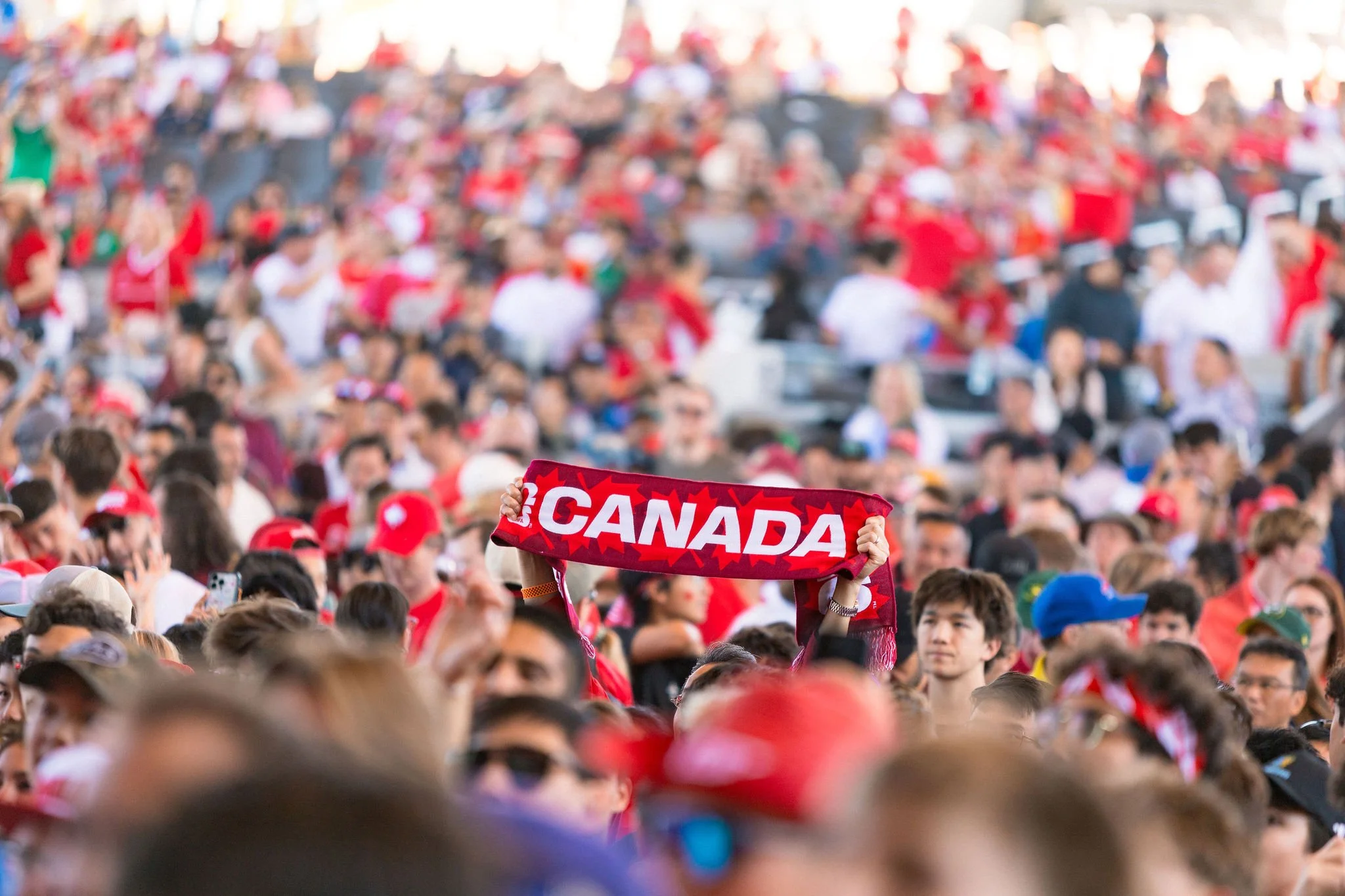
Just 6 weeks ago, we were leaving Vancouver and the SponsorshipX Activation Lab, another fantastic SponsorshipX conference, integrated during Canada's second group stage game of the FIFA 2026 Men’s World Cup. Canada beat Qatar 6-0, its first ever World Cup win, and the energy inside BC Place and at the Official FIFA Fan Festival on the grounds of the Pacific National Exhibition was something none of us had felt at a Canadian sporting event before.
At that time, we'd just emerged from three days of deep content on activation, much related to the World Cup and activations on the ground in Vancouver and then were able to witness it on the ground, in real time.
At the time, it felt like the World Cup would last forever.
But here we are, 6 weeks later and the event is over. It was a success on most accounts. Spain beat Argentina in the final. Canada made its first ever elimination round, beating South Africa in the round of 32 before losing to Morocco in the round of 16. Co-hosts Mexico and the US also advanced before bowing out in the round of 16, solid showings for all three host countries.
But the real story, the one the Activation Lab prepared us for, was sponsorship activation at a scale Canada has never seen.
TL;DR
Sponsorship revenues for FIFA World Cup 2026 approached estimates of $3 billion
More than 28 million unique Canadian viewers tuned in via Bell Canada's English and French coverage
Three FIFA sponsorship tiers (global partners, official sponsors, supporters) each ran distinct activation playbooks
FIFA Fan Festivals drew more than 9 million people across 13 host cities over 39 days
Canada Soccer House welcomed over 100,000 fans across 10 days in Toronto and Vancouver
Brands preparing for 2030 need to start building their activation plan now, not six months out
Setting the scale: FIFA World Cup 2026 by the numbers
Vancouver and Toronto hosted alongside 11 US and 3 Mexican cities, each city adding their own twists, to make a month-long splash. The 'activation lab' as this version of SponsorshipX was called, set the tone for how brands would show up at this World Cup.
The Official FIFA Fan Festival drew more than 9 million people across 13 host cities over 39 days, with 113 commercial partner activations built into the experience. Brands received impressive engagements and results. For example, according to FIFA, Coca-Cola, AB InBev, Diageo and Frito-Lay, who had exclusive rights to sell food and beverages at the Fan Fest, sold 6,327,842 total units across all food and beverage categories.
From a ratings perspective, reports so far, show a US audience (English and Spanish both) that nearly doubled from the 2022 World Cup. Digitally, FIFA is predicting north of 6 billion engagements globally.
In Canada, new highs were set. Bell Canada, owner of the English (TSN, CTV) and French (RDS) match coverage for the World Cup have reported many positive results. First, more than 28 million unique viewers (just under 70% of the population) tuned in at least once. Second, Canada's round of 16 loss against Morocco was the most watched soccer game with an average audience of 5.4 million, peaking at 7.3 million. Third, Canadians also tuned in even if Canada was not playing with an average audience of 1.9 million viewers per match for all 16 of the Round of 32 matches.
Now, let's talk sponsorship and activation. Estimates are that sponsorship revenues for the 2026 FIFA World Cup approached $3 billion. So, its needless to say, a lot of activation had to happen for brands to justify and earn an ROI on their investments.
Let's have a closer look.
How Was FIFA 2026 Sponsorship Structured to Drive Activation?
FIFA organized their 2026 sponsorships into three tiers.
Tier 1 are the seven (7) global FIFA partners: Adidas (sportswear), Coca-Cola (beverages), Hyundai/Kia (automotive), Visa (payment systems), Aramco (energy), Lenovo (technology), and Qatar Airways (travel). These brands had omnipresent activations. Adidas's Trionda ball doubled as VAR technology, Visa cardholders got ticket buying priority, Coca-Cola ran its trophy tour and in venue beverage program, and Lenovo powered Referee Cam and 3D offside scanning. Adidas and Coca-Cola have both been partners since the 1970s, a strategy where activations compound over decades.
The second tier are Official Sponsors of the 2026 World Cup. These brands sign on for the event itself. Examples include AB InBev (official beer), Bank of America, Frito-Lay (snacks), McDonald's (quick service restaurants), Dove (personal care), and Verizon (telecommunications). Many of these brands focused on broadcast and digital activations. AB InBev brand Michelob Ultra for instance, ran a set of ads including celebrity actors and soccer players, as well as naming the player of the match trophy for each of the Cup's 104 games. Similarly, Frito-Lay, using its Lay's brand of chips, ran a marketing campaign using current and former players, and actors.
Finally, the third tier, or official tournament supporters and suppliers, included a set of brands who received less marketing assets from the World Cup. Examples included Airbnb (accommodation), Fanatics (retail), Home Depot (home improvement), and Marriott (hotels). Fanatics for example had exclusive rights in venue for all 104 games, using stadium stores and pop-ups to sell their merchandise.
What did we see on the ground at fan festivals and watch parties?
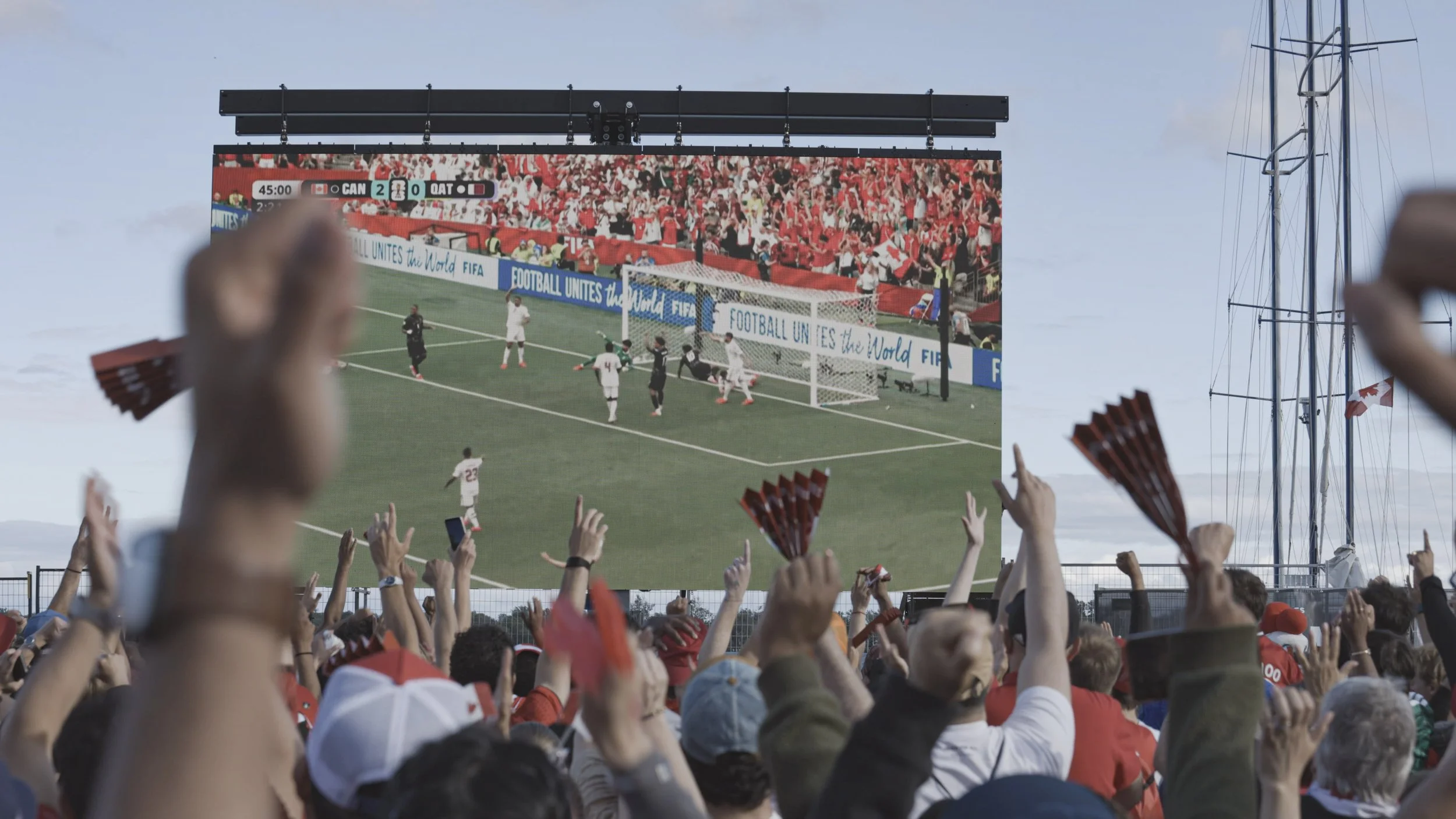
There’s nothing quite like the experience of being immersed in a fan festival or watch party in a host city of the World Cup. Viewing hubs and fan zones were filled with locals, tourists, die-hard fans and casuals alike.
The Official FIFA Fan Festival in Toronto drew 350,000 fans over 23 event days. The Nathan Phillips Square became a World Cup defining viewing hub for the city of Toronto, welcoming approximately 60,600 fans (excluding the finals). Canada Soccer House hosted 100,000 fans across 10 days in both Toronto and Vancouver.
Brands showed up with innovative soccer themed games, challenges, prizes and giveaways that generated long queues and strong dwell time. Long lines were never a deterrent as fans could watch the game on the big screen as they waited in line.
Hisense, already a near-constant presence on pitch-side boards and your television broadcast as an official sponsor, activated with a pop-up at FIFA Fan Festival, featuring a photo-editing "Champion Frame," a soccer skills dart challenge, and a foosball table. Some brands leaned into the emotional swings of a knockout tournament, not just the wins. Uber drove a "sorry for your loss" tissue box shaped truck across town, offering discounted rides and branded tissues to fans whose teams got eliminated.
Why does sponsorship need activation to work?
Those of us in sponsorship know very well of the importance, if not necessity, of activation in sponsorship to work. As we all know, "without activation, sponsorship is ineffective and you might as well save your budget for other marketing activities, like advertising, or just lower your price". This sentiment was hammered home in Vancouver as speaker after speaker at the Activation Lab, spoke of the importance of activation and investing in it in a way that allows you to reach the right audience. Watching the World Cup unfold, on the ground and then in the data over the following weeks, proved this point.
How Soon is 2030?
Not soon enough, fans of soccer and sponsorship might say. But, we do have something right around the corner that will tell some of the FIFA 2026 tale in Canada. We will all be at SponsorshipX's Brand Fandom event in Toronto on August 18th, where the 20th edition of the Canadian Sponsorship Landscape Study (CSLS) will be unveiled.