
What Milan 2026 Reveals About Winning at LA28
Author - Norm O’Reilly and Kushaal Mathew
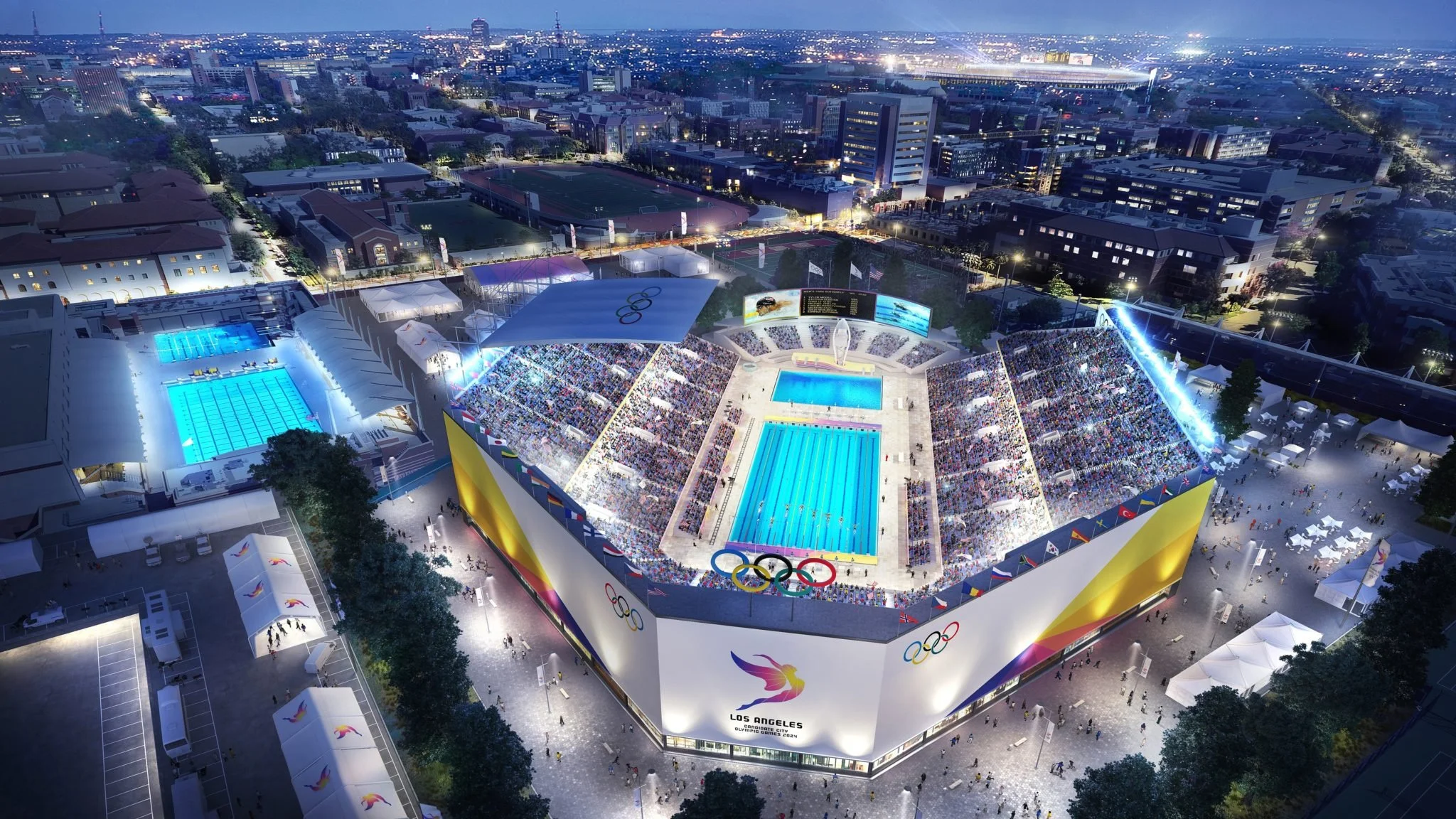
The 2026 Milano-Cortina Winter Olympic and Paralympic Games are done. The torches are out, the medals are counted, and brands that spent the last two years activating across northern Italy are now busy tallying what they got for it. But for Canadian brands and their agency partners, the most important question is not what happened in Italy. It is what happens next in Los Angeles.
LA 2028 is two years away, and the domestic sponsorship opportunity is open. If Milan taught us anything, it is that the brands who win at the Games are not the ones with the biggest budgets. They are the ones with the clearest sense of why they are there.
TL;DR
Milan 2026 attracted more than 40 domestic sponsors across premium, partner, sponsor, and supporter tiers, generating an estimated $1–1.5 billion in sponsorship revenue for the local organizing committee.
Research recently published in the International Journal of Sport Marketing and Sponsorship by Mario Nicoliello of the University of Brescia found that these domestic sponsors activated across five activation logics: image transfer, institutional legitimacy, display of ability, commercial platforming, and inclusion/ESG. We will dig into these categories more in a bit.
Interestingly, several non-Italian brands, including U.S. and German companies, acquired the domestic Italian rights specifically to reach Italian audiences and demonstrate operational capability in that market. In our view, this was a B2B play, not about mass-audience-reach.
According to the 19th annual Canadian Sponsorship Landscape Study (CSLS), Canadian sponsorship spend has surpassed $4.2 billion, with nearly one-third flowing to national properties, signaling appetite for the kind of scale LA 2028 can deliver.
The Paralympic Games are no longer a secondary property. They are a legitimate, high-viewership, high-sponsorship platform with record-breaking Canadian audiences at the 2026 Games.
Brands that jumped in late for the 2026 Games paid a premium and saw diminished returns. If LA 2028 is on your radar, the time to act is now.
How Does Olympic Domestic Sponsorship Actually Work?
There are two distinct tiers of Olympic sponsorship that can lead to confusion. The first is the global TOP (The Olympic Partner) program, where brands like Coca-Cola, Visa, and Samsung purchase worldwide rights for roughly $200 million per quadrennial. These brands get 206 countries. They get everything int he Olympic and Paralympic Movement. A similar program exists, with largely the same brands, for the Paralympics.
The second tier is domestic sponsorship, managed by the local organizing committee. These rights are country-specific, category-specific, and considerably more accessible. In Milan, that meant brands could purchase rights to call themselves Official Partners of the Games in Italy, in categories not already locked up by global TOP sponsors. Airlines. Retail. Technology. Energy. Staffing. Snow grooming machinery. And more.
There is a catch: domestic rights stay domestic. A Milan sponsor cannot run Olympic-branded campaigns in Canada. But for brans targeting a specific market, or looking to demonstrate capability to a specific audience, the geographic constraint is the point, not the problem.
5 Activation Logics That Brands Used in Milan
Nicoliello’s recently published study analyzed 31 long-term domestic sponsors of the 2026 Games identifying five activation logics — five distinct reasons a brand chooses to invest in a property like the Games. These are worth understanding, because they map directly onto how Canadian brands should be thinking about LA 2028.
1. Image Transfer
Armani built EA7, a sport-forward clothing line priced below its mainline offering and used the Games as a platform to reposition the brand for a broader Italian audience. It was not about selling clothing. It was about expanding the audience Armani could credibly speak to. Fashion, cosmetics, food, and luxury brands leaned heavily on this logic.
2. Institutional Legitimacy
Italy’s equivalent of Hydro One lit up castles, athlete villages, and venues with clean electrical power, and promoted every moment of it. Major grocery retailer Esselunga partnered with Coca-Cola to activate around sustainable food delivery to the Olympic Village. These were not goodwill gestures. They were brand assertions: we are part of this country, and we show up when it counts. Banks, energy providers, and transport operators made the most of this approach.
3. Display of Ability
This is where Milan got interesting. German snowmaking company Kässbohrer Geländefahrzeug did not sponsor the Games to run ads. They signed a legal contract guaranteeing perfect trail conditions, whether temperatures hit plus-10 or minus-30, and promoted that contract as their creative campaign.
Salesforce took a similar approach, committing to make the organizing committee’s operations run flawlessly through CRM and AI tools, then targeting Italian businesses as the audience for that proof. No product sampling. No broadcast reach. Just a very public demonstration of capability.
4. Commercial Platforming
Ticketing and transport providers used in-kind deals to secure official status and the commercial rights that come with it. Straightforward, useful, and effective for brands whose core product is a critical operational input.
5. Inclusion, Sustainability, and ESG
Ottobock, the only unique global Paralympic TOP sponsor (i.e., they are not an Olympic global partner), made a notable move in Milan: they also purchased domestic Italian Olympic sponsorship rights. Their reason was simple. The Olympic rings provided them with a platform their Paralympic rights could not. Their activation was about prosthetics, mobility, and what life can look like for people with disabilities — athletes and general population alike. It is a compelling reminder that inclusion-focused brands are no longer limited to the Paralympic property.
Why Should Canadian Brands Be Paying Attention Right Now?
The aforementioned CSLS tells a consistent story: Canadian brands are spending more on sponsorship, spending more strategically, and increasingly concentrating that spend on national properties. For the first time, the Canadian sponsorship industry has surpassed $4 billion. Nearly one-third of that went to national sponsorship properties.
At the same time, viewership data from the Paralympic Games in Canada is breaking records. More Canadians watched the 2026 Paralympic Games than watched Vancouver 2010. The community around these events is real, large, and deeply engaged.
LA 2028 sits at an unusual intersection: it is geographically close, culturally resonant, and arriving immediately after the FIFA World Cup, which is itself partially hosted in Canada. The sequential proximity of these two events creates a sustained window of sporting attention that Canada has not experienced since 2010. Brands that move early will be able to activate across both, build momentum, and avoid paying the premium that late entrants to Milan 2026 ended up absorbing.
In Milan, sponsors who joined in the final months paid more and got less. The long-term partners had four years to build awareness, integrate into programming, and prove their return on objectives. That window exists for LA 2028 right now.
What Does This Mean for Your Brand?
At T1, we see the LA 2028 opportunity through the lens of the CSLS: brands are spending where they expect return. The five activation logics from Milan are a practical framework for any Canadian brand trying to decide whether Olympic sponsorship is the right move, and if so, where to play.
The question is not “can we afford it?” The question is “what are we actually trying to do?” Brands with a genuine stake in institutional credibility, brands trying to shift their image, brands with operational proof points they have never found a big enough stage to demonstrate, and brands with meaningful inclusion or sustainability commitments all have something real to activate. The Games give that activation scale and cultural legitimacy that very few other properties can match.
The current environment, where Canadian national identity feels sharper than it has in a generation, adds another layer. Brands that show up for Canadian athletes, Canadian communities, and Canadian values are not just buying visibility. They are participating in something communities care about. CSLS results support this.
Community is not an audience. It is the strategy. And for the next two years, one of the biggest opportunities to build community through sport is sitting wide open.
If you are a brand leader thinking about LA 2028, or wondering whether the Olympics can deliver meaningful return on objectives, we would like to have that conversation. Reach out to the T1 team or explore our Canadian Sponsorship Landscape Study for the benchmarking and category data your team needs to make the case internally.